 Dexon Technology
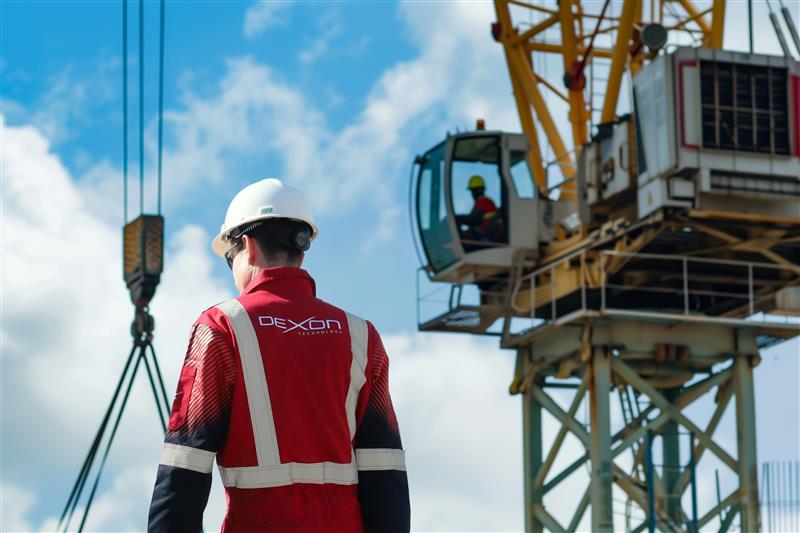
Crane operations are some of the riskiest activities on any industrial site – whether it is lifting heavy pipe racks, repositioning scaffolding, or offloading at the wharf.
The loads are heavy. The consequences are even heavier. And small failures, like rusted shackles, degraded wire ropes, or worn pins, can trigger major accidents.
That is why under Thai law and most international standards, cranes are classified as high-risk machinery – and why inspections are required before, during, and after use.
Too often, though, safety becomes an exercise in ticking boxes.
According to Adisak Mananus, Dexon’s Director of Operations, “A proper inspection means looking at real-world conditions and using advanced NDT and structural analysis, like understanding load paths, site conditions, and history – not just reading the logbook.”
“With cranes,” he added, “proper inspection means proper inspections – inspecting again and again and again to operate with confidence rather than wishing for the best.”
Dexon’s approach to crane inspection includes:
Full structural assessment
Lifting gear, rigging, and support analysis
Non-Destructive Testing (NDT) to detect hidden flaws
An assessment of temporary structures & foundations
We reference ISO 9712, ISO 17635, and ASME B30 standards and bring decades of experience supporting lifting operations in petrochemical, fabrication, and high-risk industrial sites.
We do not deliver checked off boxes.
We deliver better safety, fewer surprises, and clear accountability.