 Dexon Technology
Before an in-line inspection (ILI) tool is deployed, engineers need to know two things:
1. Can the tool survive realistic operating conditions?
2. Can it deliver stable, reliable inspection data over time?
To answer these, engineers rely on two types of push-through testing, conventional & closed-loop.
) 𝗖𝗼𝗻𝘃𝗲𝗻𝘁𝗶𝗼𝗻𝗮𝗹 𝗣𝘂𝘀𝗵-𝗧𝗵𝗿𝗼𝘂𝗴𝗵 𝗧𝗲𝘀𝘁𝗶𝗻𝗴
𝗖𝗼𝗻𝘃𝗲𝗻𝘁𝗶𝗼𝗻𝗮𝗹 𝗣𝘂𝘀𝗵-𝗧𝗵𝗿𝗼𝘂𝗴𝗵 𝗧𝗲𝘀𝘁𝗶𝗻𝗴
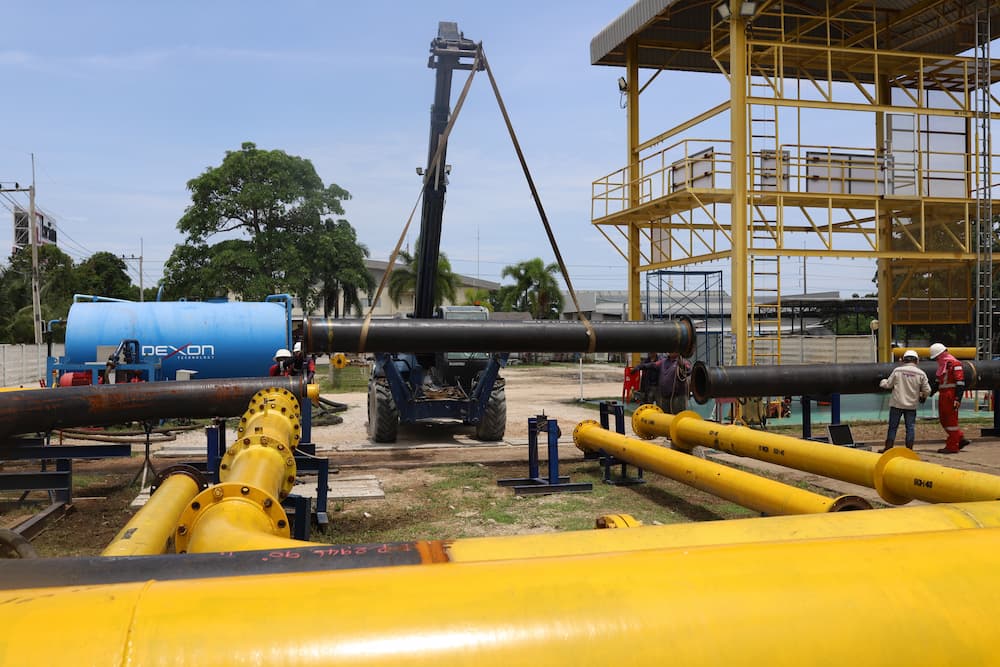
In conventional setups, pneumatic or hydraulic pumps propel the ILI tool through a long test string to the end of the line. An example from Dexon's test yard is pictured below on the right.
This approach provides valuable insight into:
• Tool passage through realistic geometry
• Velocity behavior under flow
• Data quality under operating conditions
• Detection and sizing performance against known defects
Notably, push-through tests are the only way to assess the defect-detection capability of UT tools, while MFL tools can be tested using pull-through tests.
Conventional push-through testing is widely used because it is simpler to build and operate.
However, because the tool stops between runs, it can be difficult to evaluate how the system behaves over extended operating periods and collect sufficient data to benchmark performance.
) 𝗖𝗹𝗼𝘀𝗲𝗱-𝗟𝗼𝗼𝗽 𝗣𝘂𝘀𝗵-𝗧𝗵𝗿𝗼𝘂𝗴𝗵 𝗧𝗲𝘀𝘁𝗶𝗻𝗴
𝗖𝗹𝗼𝘀𝗲𝗱-𝗟𝗼𝗼𝗽 𝗣𝘂𝘀𝗵-𝗧𝗵𝗿𝗼𝘂𝗴𝗵 𝗧𝗲𝘀𝘁𝗶𝗻𝗴
Closed-loop push-through testing allows the ILI tool to continuously circulate through the pipeline loop without stopping, as the line is built as a closed circuit.
Rather than retrieving and resetting the tool after each pass, the tool can run repeatedly for extended periods under constant flow conditions, sometimes for upwards of 48 hours.
This testing enables engineers to evaluate:
• Long-duration mechanical reliability
• Electronics stability over extended operation
• Repeatability of inspection data
• Wear over time
• Heat generation and power behavior
• Consistency of defect detection across multiple passes
Closed-loop systems are particularly valuable when validating new technologies, qualifying difficult tools, or troubleshooting intermittent issues that may only appear after prolonged operation.
However, installing a closed-loop system requires significant resources, including space and manpower, to install & operate.
Dexon's closed-loop circuits are pictured left. A single spool is left open in the circuits when they are not in operation.
𝗪𝗵𝘆 𝗜𝘁 𝗠𝗮𝘁𝘁𝗲𝗿𝘀
The distinction between methods is subtle but important when it comes to tool validation:
• Conventional push-through testing = realistic short-duration validation
• True closed-loop testing = long-duration operational validation